Semi Annual Limit Review
JPMorgan Chase · March 2025 - May 2025
Responsibilities
- UX Leadership
- Design Deliverables
- Cross-platform integration
Tools


Figma


Lucidspark

Optimal Workshop
Executive Summary
The Semi Annual Limit Review (SALR) is a semi annual report that provides coverage teams an opportunity to retrospectively review the Limits and Controls and how they were changed or managed. Different coverage teams have varying approaches to compiling and publishing this report, but the product team was broadly aware that this was a major pain point for teams and therefore an opportunity for observable improvements in the platform.
Goals
- Develop a better understanding of the SALR process and the user pain points derived from completing it.
- Understand how users conceptualize, manage, and organize their limits and controls in the context of the SALR
- Inform future product improvements (data aggregation, customization, visualization, reporting)
The initiative arose after feedback from the Intraday Utilization user research suggested users wanted to have quicker and more customizable access to their Limits populations, possibly via Watchlists. The UX team pitched discovery research to have more difinitive
Research Insights
We conducted research sessions with 4 e-Trading Risk Management (ETRM), Business Control Manager (BCM), and Market Risk Committee (MRC) end users. Notes were recorded an analyzed with Optimal Workshop.
Key Findings
- Currently, users rely on memory for applying limit filters [to the search database] but multiple clicks are required to access limits which increases user time on task.
- Saved limit lists is seen as valuable to efficiently find limits, particularly for users who work with limits across enforcement systems or Business Unit/Enforcement System/Region (BER) groupings.
- Users want to be able to
- customize lists
- share lists with others
- Have lists update automatically
- Particular interest was given to the rules-based list builder.
Final Designs and Outcomes
While the designs were well-received, development was postponed due to a shift in priorities led by the approval of the Market Risk Hub concept and investment proposal. The designs would educate complex list building and limit search functionality in the Limits Hub, the Limits focused alternative to the Market Risk Hub.

From sticky product challenges to shaping design culture, I love creating solutions that make an impact.
If you’re looking for a fresh perspective, let’s chat 👋
Socials


Semi Annual Limit Review
JPMorgan Chase · March 2025 - May 2025
Responsibilities
- UX Leadership
- Design Deliverables
- Cross-platform integration
Tools
Figma

Lucidspark

Optimal Workshop
Executive Summary
The Semi Annual Limit Review (SALR) is a semi annual report that provides coverage teams an opportunity to retrospectively review the Limits and Controls and how they were changed or managed. Different coverage teams have varying approaches to compiling and publishing this report, but the product team was broadly aware that this was a major pain point for teams and therefore an opportunity for observable improvements in the platform.
Goals
- Develop a better understanding of the SALR process and the user pain points derived from completing it.
- Understand how users conceptualize, manage, and organize their limits and controls in the context of the SALR
- Inform future product improvements (data aggregation, customization, visualization, reporting)
The initiative arose after feedback from the Intraday Utilization user research suggested users wanted to have quicker and more customizable access to their Limits populations, possibly via Watchlists. The UX team pitched discovery research to have more difinitive
Research Insights
We conducted research sessions with 4 e-Trading Risk Management (ETRM), Business Control Manager (BCM), and Market Risk Committee (MRC) end users. Notes were recorded an analyzed with Optimal Workshop.
Key Findings
- Currently, users rely on memory for applying limit filters [to the search database] but multiple clicks are required to access limits which increases user time on task.
- Saved limit lists is seen as valuable to efficiently find limits, particularly for users who work with limits across enforcement systems or Business Unit/Enforcement System/Region (BER) groupings.
- Users want to be able to
- customize lists
- share lists with others
- Have lists update automatically
- Particular interest was given to the rules-based list builder.
Final Designs and Outcomes
While the designs were well-received, development was postponed due to a shift in priorities led by the approval of the Market Risk Hub concept and investment proposal. The designs would educate complex list building and limit search functionality in the Limits Hub, the Limits focused alternative to the Market Risk Hub.
From sticky product challenges to shaping design culture, I love creating solutions that make an impact.
If you’re looking for a fresh perspective, let’s chat 👋
Socials
Pages
Work
Extras
Resources
My Resume
Semi Annual Limit Review
JPMorgan Chase · March 2025 - May 2025
Responsibilities
- UX Leadership
- Design Deliverables
- Cross-platform integration
Tools
Figma
Lucidspark
Optimal Workshop
Executive Summary
The Semi Annual Limit Review (SALR) is a semi annual report that provides coverage teams an opportunity to retrospectively review the Limits and Controls and how they were changed or managed. Different coverage teams have varying approaches to compiling and publishing this report, but the product team was broadly aware that this was a major pain point for teams and therefore an opportunity for observable improvements in the platform.
Goals
- Develop a better understanding of the SALR process and the user pain points derived from completing it.
- Understand how users conceptualize, manage, and organize their limits and controls in the context of the SALR
- Inform future product improvements (data aggregation, customization, visualization, reporting)
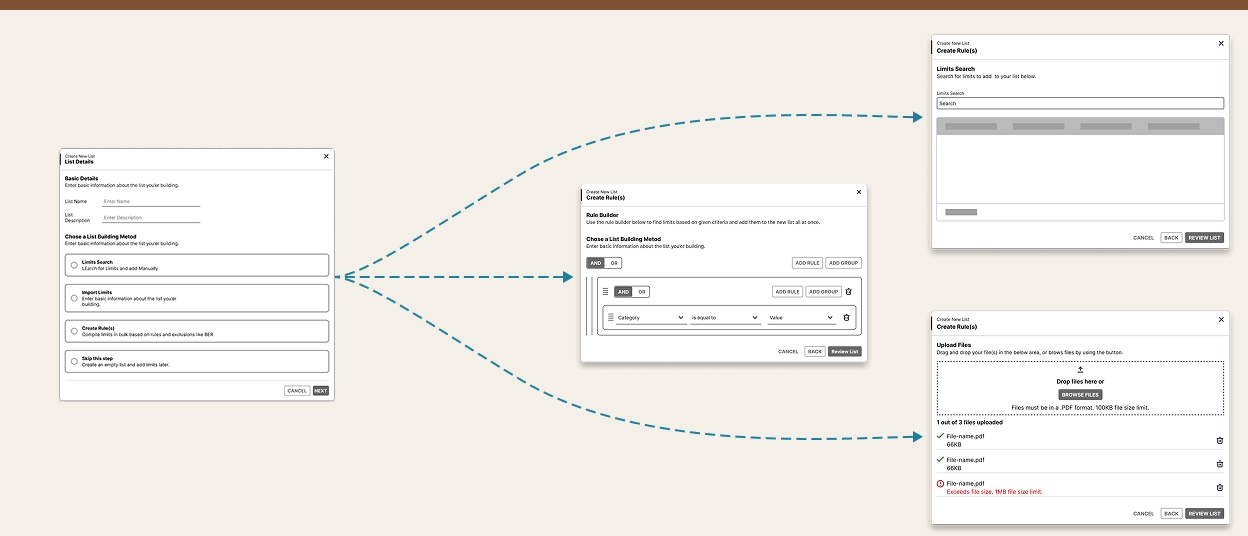
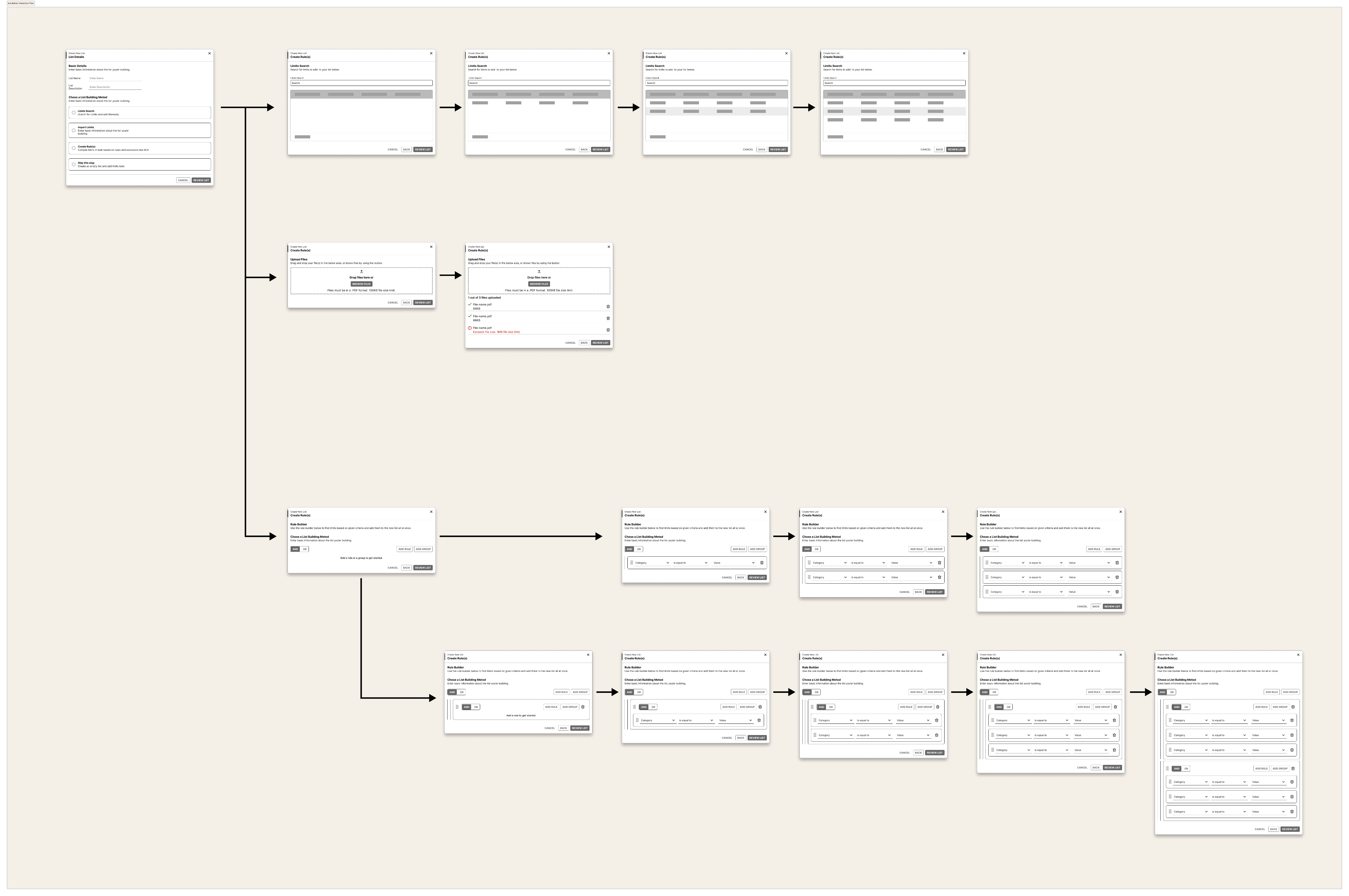
Designing for DiscoveryI compiled the design flows for this research effort. With them we explored how users might want to create and engage with their lists. For this I explored different ways lists are made and came up with three methods to review: adding one limit at a time (Favorites, Bookmarks, Watchlist, etc. ), adding limits based on prior data (CSV. upload), and a rule-based method. The designs were kept lo-fi to ensure users focused more on ideas being conveyed by the designs and not the specific details.
Research Insights
We conducted research sessions with 4 e-Trading Risk Management (ETRM), Business Control Manager (BCM), and Market Risk Committee (MRC) end users. Notes were recorded an analyzed with Optimal Workshop.
Key Findings
- Currently, users rely on memory for applying limit filters [to the search database] but multiple clicks are required to access limits which increases user time on task.
- Saved limit lists is seen as valuable to efficiently find limits, particularly for users who work with limits across enforcement systems or Business Unit/Enforcement System/Region (BER) groupings.
- Users want to be able to
- customize lists
- share lists with others
- Have lists update automatically
- Particular interest was given to the rules-based list builder.
Final Designs and Outcomes
While the designs were well-received, development was postponed due to a shift in priorities led by the approval of the Market Risk Hub concept and investment proposal. The designs would educate complex list building and limit search functionality in the Limits Hub, the Limits focused alternative to the Market Risk Hub.
From sticky product challenges to shaping design culture, I love creating solutions that make an impact.
If you’re looking for a fresh perspective, let’s chat 👋
Socials
Pages
Work
Extras
Resources
My Resume